
How to Choose the Right Tennis Ball Machine for Your Skill Level
A tennis ball machine can be one of the most valuable training tools for improving your game. Whether you’re a beginner learning basic strokes or an advanced player working on match-level drills, the right machine allows you to practice hundreds of shots in a single session. Consistent repetition helps build muscle memory and improve accuracy over time. Tennis practice machine
However, not all tennis ball machines are the same. Choosing one that matches your skill level, training goals, and budget is essential for getting the most out of your investment.
In this guide, you’ll learn how to choose the right tennis ball machine based on your playing level and what features matter most. Tennis practice machine
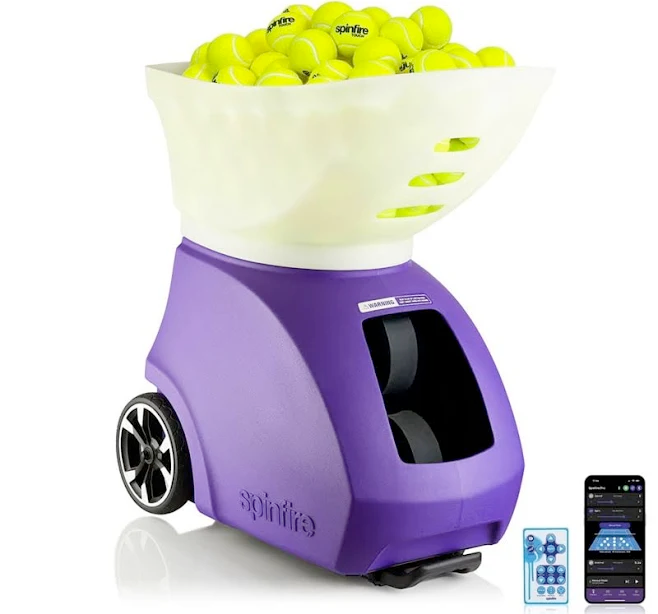
Why Your Skill Level Matters When Choosing a Ball Machine
Different players require different training intensity and features. Beginners usually need simple machines that deliver slower, consistent balls, while advanced players benefit from machines that can simulate real match situations with varying spins and unpredictable shots.
Key features such as speed range, spin control, oscillation, and feed rate directly affect how realistic and challenging the practice sessions are.
Choosing the right machine ensures you can progress without being overwhelmed or limited by your equipment.
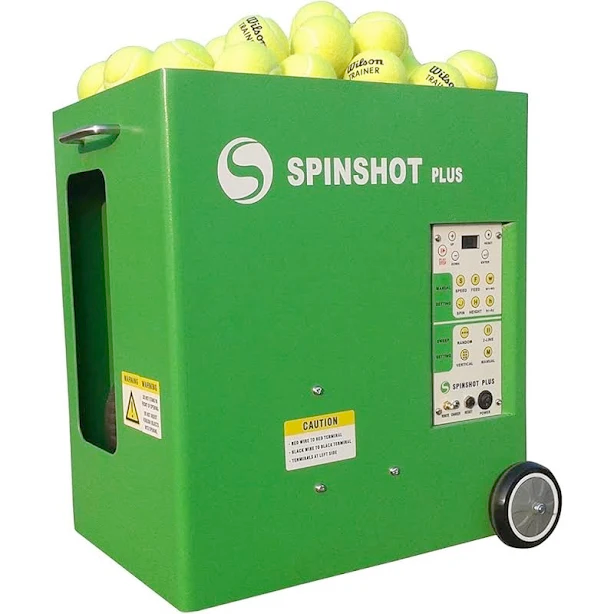
1. Tennis Ball Machines for Beginners
If you’re new to tennis or just starting to practice regularly, you should look for a simple and easy-to-use machine that focuses on consistency rather than complexity.
Ideal Features for Beginners
1. Lower Ball Speeds
Beginners should practice with slower speeds (around 40–50 km/h) to focus on proper swing technique and timing.
2. Simple Controls
Machines with straightforward controls are easier to operate while learning.
3. Minimal Oscillation
Side-to-side ball movement can make drills too difficult early on, so machines that deliver balls straight ahead are ideal.
4. Moderate Ball Capacity
A machine holding 50–120 balls is usually sufficient for beginner practice sessions.
What Beginners Should Focus On
- Developing consistent strokes
- Learning proper footwork
- Practicing timing and rhythm
Entry-level machines are also the most affordable, often costing $300 to $700, making them a good starting point for recreational players.
2. Tennis Ball Machines for Intermediate Players
Intermediate players typically want to improve movement, shot variety, and consistency during rallies. At this stage, machines with more adjustable features become useful.
Important Features for Intermediate Players
1. Adjustable Ball Speed
Intermediate players should practice at 60–80 km/h to simulate realistic rally speeds.
2. Spin Control
Machines with topspin and backspin settings allow players to practice handling different types of shots.
3. Oscillation (Side-to-Side Movement)
Horizontal oscillation forces players to move across the court, improving footwork and recovery.
4. Larger Ball Capacity
Machines holding 120–200 balls allow longer practice sessions without frequent refilling.
Training Benefits
Intermediate machines help you practice:
- Cross-court rallies
- Backhand and forehand consistency
- Court positioning and movement
3. Tennis Ball Machines for Advanced Players
Advanced players need machines capable of replicating real match scenarios. These machines offer powerful speeds, multiple spin types, and programmable drills.
Advanced Features to Look For
1. High Ball Speed
Advanced players may train with speeds of 80–110+ km/h to replicate competitive play.
2. Multiple Spin Types
Topspin, slice, and flat shots help simulate different opponents and match situations.
3. Programmable Drills
Some machines allow customized shot sequences that mimic real rallies.
4. Triple Oscillation
High-end machines can move balls horizontally and vertically, creating unpredictable patterns similar to a real opponent.
Advanced Training Benefits
These machines allow players to practice:
- Return of serve
- Passing shots
- Defensive movement
- Match simulation drills
4. Key Features to Compare Before Buying
Regardless of skill level, here are the most important specifications to evaluate:
Ball Speed
Entry-level machines may reach around 70 mph, while advanced models can exceed 100 mph.
Feed Rate
Adjustable intervals (2–10 seconds) let you control the pace of drills.
Spin Control
Dual-wheel systems allow realistic topspin and backspin shots.
Ball Capacity
Machines typically hold 50 to 300 balls, affecting how long you can train before refilling.
Power Source
- Battery-powered: portable and ideal for outdoor courts
- AC-powered: unlimited play time but less portable
Portability
Lightweight machines are easier to transport to public courts.
5. Portable vs Club-Level Machines
Portable Machines
Best for:
- Home practice
- Recreational players
- Public courts
Features:
- Battery powered
- Lightweight
- Smaller ball capacity
Club-Level Machines
Best for:
- Tennis academies
- Professional training
- Coaches running drills
Features:
- High speed
- Programmable drills
- Larger ball capacity
Portable models are the most popular for individual players because they’re easier to transport and store.
Final Thoughts
Choosing the right tennis ball machine comes down to matching the machine’s features with your skill level and training goals. Beginners should prioritize simplicity and affordability, while intermediate and advanced players benefit from machines that offer spin variation, oscillation, and programmable drills. Tennis practice machine
The right machine can transform your training sessions by allowing you to practice consistently—even when you don’t have a hitting partner. Tennis practice machine


